

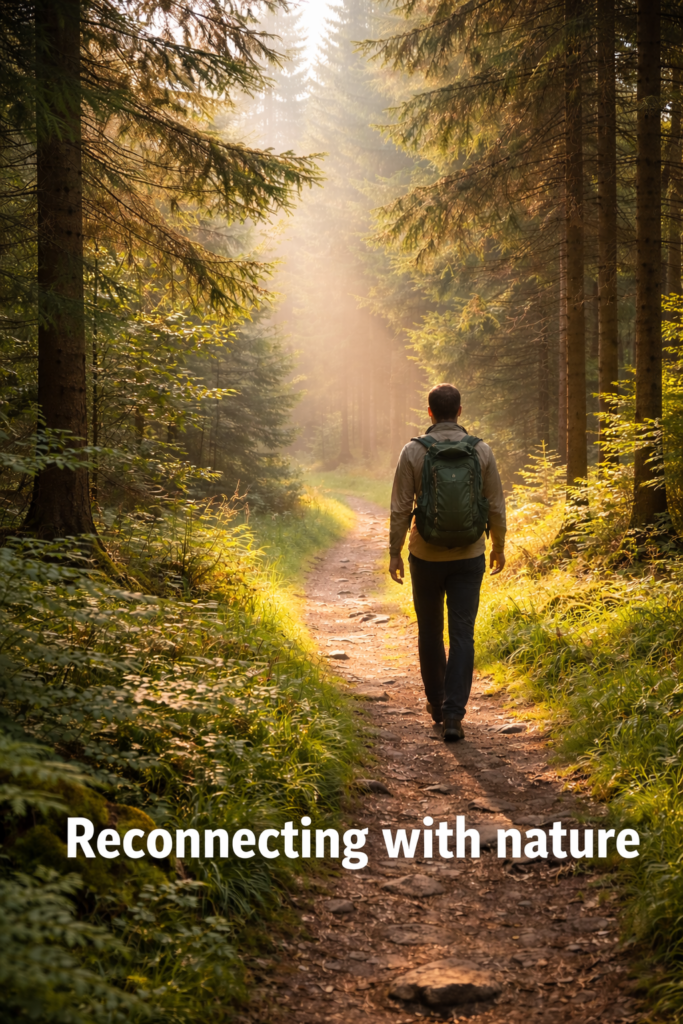
There’s a quiet voice inside all of us that awakens when we hear the rustle of leaves, the crash of waves, or the distant echo of mountains. It’s not loud, and it doesn’t demand attention—but it lingers. It pulls. It reminds us of something ancient and familiar. This is the call of the wild—the deep, human urge to step away from concrete lives and begin reconnecting with nature.
In a world dominated by screens, schedules, and noise, wandering into nature feels less like a luxury and more like a necessity. We wander not because we are lost, but because somewhere along the way, we forgot how it feels to be truly present.
What Does “The Call of the Wild” Really Mean?
The phrase “the call of the wild” isn’t just poetic—it reflects a timeless truth about human nature. Long before cities existed, humans lived in rhythm with the earth. Our survival depended on understanding the land, reading the sky, and listening to nature’s signals.
Even today, that instinct remains embedded within us.
When people feel restless, burned out, or emotionally drained, they’re often responding to the absence of something essential—connection. Reconnecting with nature satisfies a longing that modern life struggles to replace. It restores balance, offering a sense of belonging that feels instinctive rather than learned.
Why We Wander: A Deeply Human Instinct
Wandering isn’t about aimlessness. It’s about curiosity. About movement without pressure. About exploration without expectation.
We wander because:
- Our minds crave freedom
- Our bodies need space to breathe
- Our souls seek meaning beyond routine
Reconnecting with nature allows us to wander without judgment. There’s no deadline in a forest, no notification on a mountain, and no competition in the ocean’s tide. Nature invites us to move at our own pace.
This freedom is rare—and profoundly healing.
Table of Contents
The Modern Disconnect From Nature
Technology has transformed our lives, but it has also distanced us from the natural world. Many people spend more time scrolling through images of nature than actually experiencing it.
Urban living often means:
- Artificial lighting instead of sunlight
- Noise instead of birdsong
- Concrete instead of soil
- Screens instead of skies
Over time, this disconnect manifests as stress, anxiety, fatigue, and emotional numbness. Reconnecting with nature becomes a powerful antidote—not because nature fixes everything, but because it reminds us who we are without distraction.
Reconnecting With Nature: Why It Matters More Than Ever
Reconnecting with nature isn’t about escaping life—it’s about returning to it.
When we immerse ourselves in natural environments, we experience:
- Reduced stress and anxiety
- Improved mental clarity
- Better emotional regulation
- Stronger sense of self
Nature doesn’t demand productivity. It doesn’t measure worth. It simply exists—and invites us to do the same.
Even brief moments outdoors—walking barefoot on grass, watching a sunset, listening to rainfall—can reset the nervous system. Over time, these moments accumulate into resilience.
Nature and Mental Health: A Silent Healer
Mental health challenges are increasingly common, and while there’s no single solution, reconnecting with nature plays a powerful supportive role.
Studies and lived experiences consistently show that time in nature:
- Lowers cortisol (stress hormone)
- Improves mood and focus
- Reduces symptoms of depression
- Encourages mindfulness
But beyond science, there’s something deeply personal about healing outdoors. Nature offers perspective. A mountain reminds us of scale. A river teaches us flow. A forest shows us growth without urgency.
In nature, we are reminded that it’s okay to slow down.
The Emotional Power of Being Alone in the Wild
One of the most transformative aspects of wandering in nature is solitude.
In silence, we hear ourselves more clearly.
Without constant input from the outside world, our inner voice becomes stronger. Thoughts settle. Emotions surface. Clarity emerges. Reconnecting with nature often leads to reconnecting with ourselves—our values, our fears, our hopes.
This is why solo hikes, early-morning walks, or quiet camping trips feel so profound. They aren’t lonely—they’re honest.
Adventure as a Path to Self-Discovery
Adventure doesn’t have to mean danger. Sometimes, it simply means stepping outside what’s familiar.
Exploring a new trail, camping under unfamiliar stars, or traveling to untouched landscapes challenges comfort zones in gentle but meaningful ways. Each experience builds confidence, awareness, and adaptability.
Reconnecting with nature through adventure teaches us:
- Trust in ourselves
- Respect for our limits
- Gratitude for simplicity
These lessons often follow us home, reshaping how we approach everyday life.
The Role of Nature in Spiritual Connection
For many cultures and individuals, nature has always been sacred.
Mountains are places of reflection. Rivers symbolize renewal. Forests represent wisdom. Oceans evoke humility. Regardless of belief systems, reconnecting with nature often feels spiritual—not in doctrine, but in presence.
Moments like:
- Watching the sun rise in silence
- Standing beneath a star-filled sky
- Feeling wind brush against skin
These experiences dissolve ego and remind us that we’re part of something vast and interconnected.
Why Wandering Heals Creativity and Imagination
Creativity thrives in open spaces.
When the mind isn’t overstimulated, it begins to wander—freely and imaginatively. Nature provides endless inspiration through patterns, colors, sounds, and movement.
Many writers, artists, and thinkers credit reconnecting with nature as a source of creative renewal. Wandering without purpose allows ideas to surface naturally, without pressure.
In nature, creativity isn’t forced—it flows.
Small Ways to Reconnect With Nature Every Day
You don’t need to disappear into the wilderness to feel the benefits of nature. Reconnecting with nature can begin with simple, intentional choices:
- Take walks in nearby parks
- Sit outdoors during breaks
- Watch sunsets or sunrises
- Grow plants or herbs
- Listen to natural sounds
- Reduce screen time outdoors
The goal isn’t distance—it’s awareness.
Travel, Nature, and the Search for Meaning
Travel often becomes more meaningful when it’s rooted in nature. Visiting mountains, forests, beaches, or rural landscapes offers experiences that go beyond sightseeing.
Nature-based travel encourages:
- Slower exploration
- Deeper cultural appreciation
- Environmental respect
Reconnecting with nature while traveling shifts focus from consumption to connection. It transforms trips into journeys—both outward and inward.
The Environmental Responsibility of Reconnection
Reconnecting with nature also carries responsibility.
When we form emotional bonds with natural spaces, we become more protective of them. Awareness leads to care. Care leads to action.
Responsible wandering means:
- Leaving no trace
- Respecting wildlife
- Supporting conservation
- Choosing sustainable travel
By reconnecting with nature, we don’t just heal ourselves—we contribute to the planet’s healing too.
Why the Wild Still Calls Us Back
No matter how advanced society becomes, nature continues to call us back. Not loudly—but persistently.
It calls us when we feel overwhelmed.
It calls us when life feels meaningless.
It calls us when we’re searching for something unnamed.
The wild reminds us that we don’t need to be more—we need to be.
Conclusion: Answering the Call
The call of the wild isn’t about abandoning modern life—it’s about balancing it.
Reconnecting with nature helps us remember our roots, restore our energy, and realign our priorities. It invites us to wander—not to escape responsibility, but to rediscover purpose.
In answering the call, we don’t lose ourselves.
We find ourselves again—grounded, present, and whole.
And once you hear it, truly hear it, the call of the wild never fades. 🌿